Leadership is stewardship.
Not authority.
It begins with the government of oneself and expands outward — through relationships, teams, organisations, institutions, and the generations that follow.
The measure of a leader is not influence accumulated but responsibility assumed; not the reach of their command but the capability that remains when they are gone.
This system exists to develop leaders whose capability survives their absence, and whose stewardship widens what is possible for others.
LOS does not promise transformation. LOS promises something harder and provable: any capability it claims to develop can be demonstrated, sustained, transferred to others, and shown to survive your absence — or it is not counted as installed.
- ✕ Not a course
- ✕ Not a competency catalogue
- ✕ Not a certification factory
A lifelong leadership practice system. The objective is not knowledge acquisition. The objective is capability installation.
Most leadership development produces knowledge. LOS exists to produce capability.
Courses without installation. Certificates without evidence. Programmes that measure attendance, not capability. The leadership development industry has confused information with development and completion with mastery. LOS is built on one premise: a capability not demonstrated, not sustained, not transferred, and not proven to survive your absence has not been installed — and should not be counted.
What holds this system together.
Belts say how far you reach. Maturity says from where. Transfer says how deep — one capability at a time. Context says under what conditions.
The measurement system.
Measure stewardship radius — how far you are trusted to reach. The primary progression. Belt measures reach; Maturity measures the interior. The two are never conflated.
Measures inner orientation — the question you are privately answering. Cuts across belts; never conflated with them.
Measures depth of installation, per capability. The same practitioner may be Level 4 on Trust Building and Level 1 on Conflict Navigation.
Measures the operating environment. Context is read, never climbed — it is not a progression. The same Trust Building capability expresses differently in each.
What is stewarded.
The domains describe what is stewarded. They are not a maturity ladder — a practitioner works across several at once.
Treat the upstream cause, not the downstream symptom.
Capabilities are not equal. Some are foundational; others degrade when their prerequisites are absent. When a high capability fails, look down its chain before adding training at the point of failure.
A1 — Inner Governance. The root capability. The reference template. The first field-built Blueprint.
What a capability looks like inside LOS.
A1 Inner Governance is the root of every dependency chain — and the first capability written end-to-end. All 33 remaining capabilities follow this same shape across 14 fields. What follows is a representative view.
- Govern your internal states before you attempt to govern anything external.
- Keep the promises you make to yourself the way you expect others to keep theirs.
- The reliability others feel in you begins with the reliability you maintain when no one is watching.
Purpose · Core Question · Capability Signature · Cognitive Models · Principles · Failure Architecture · Anti-Patterns · Protocols · Drills · Missions · Reflection · Evidence · Transfer · Mastery Indicators. Every capability, in every curriculum revision, takes this fixed shape.
Where the practice happens.
Belt progression opens new dojos; it never closes earlier ones. Everyone enters at White Belt in the Personal Dojo, beginning with A1 — Inner Governance.
Self-governance practice. Where every practitioner starts — and where every practitioner continues, regardless of belt.
People and team leadership. Opens at Yellow Belt when the practitioner begins leading one person.
System and organisation leadership. Opens when stewardship radius spans multiple teams.
Institution, renewal, and legacy. Opens when the practitioner leads an organisation or builds for the future.
Six volumes. One arc.
Self Governance — Domain A. The root of every capability chain. Begins with Inner Governance.
Human Leadership — Domain B. Trust, communication, conflict, influence, mentorship.
Collective Leadership — Domain C. Architecture, decision, culture, collective intelligence.
Organisational Leadership — Domain D. Strategy, design, change, execution, resources.
Stewardship — Domain E. Institution building, renewal, succession, moral courage.
Integrative. Introduces no new capability set. Draws A–F into wisdom, renewal, and legacy. Mastery is integration, not addition.
Where it stands.
The Constitution is the stable core — designed to remain unchanged for decades. Five instruments around it evolve continuously.
Preamble, purpose, principles, spine + axes + lens, all six domains, blueprint shape, dependency map, dojo model, evidence philosophy, canon, defining principle.
A1 Inner Governance — the reference template — is written end-to-end across all 14 fields. All 33 remaining capabilities follow in Dependency-Map order.
Five families: Reality · Reasoning · Strategic · Human · Execution. Plus principles, four failure states, anti-patterns, context readings. Shaped by practitioner evidence, not desk taxonomy.
Per belt: stewardship radius, required transfer levels, the three evidence types, assessor checklist. Confirmed during the first twenty.
Entry conditions, session cadence, core rituals, mentor chain mechanics — each practitioner develops one person as the literal scaling engine.
Archetype diagnostic, stewardship coverage checklist, transfer-level rubric per capability, maturity reflection.
The leader who suspects that what they know is not yet what they can reliably do.
Beginning to lead yourself and one other person. The personal discipline is not yet consistent. The habits that make you reliable to others are still being formed.
Leading people and teams. The question is no longer whether you can perform — it is whether your capability holds under pressure, scales across people, and survives when you are not in the room.
Leading functions, organisations, or building institutions. The question has changed: not what you can do, but what will remain after you are gone. The final test of every capability is whether it outlasts you.
The system is in active development.
LOS is built in the open — the Constitution is frozen, the Capability Handbook is in progress, and the curriculum is shaped by practitioner evidence. Follow the work as it develops.
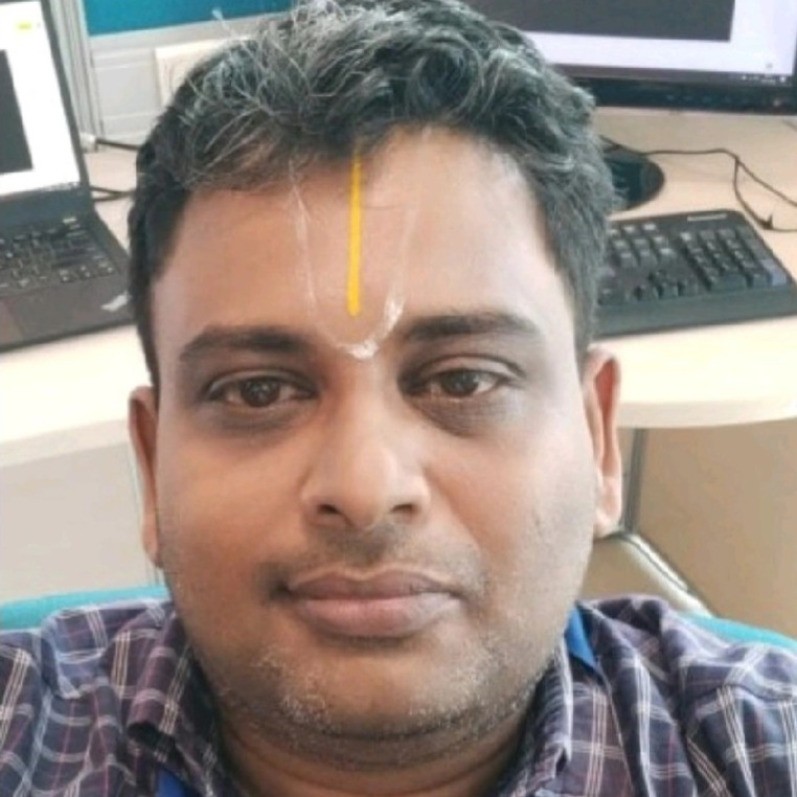
LOS is drawn from 25+ years of hands-on leadership practice — not desk analysis. The capabilities described are ones I have had to develop, fail at, and rebuild.
Full storyLeadership is the progressive expansion of stewardship. Capability is installed only when it performs, sustains, transfers, and survives absence.
Anything not questioned is a gateway to mediocrity. Anything questioned with curiosity is the way to meritocracy. Let us stop expecting that we are always right.